
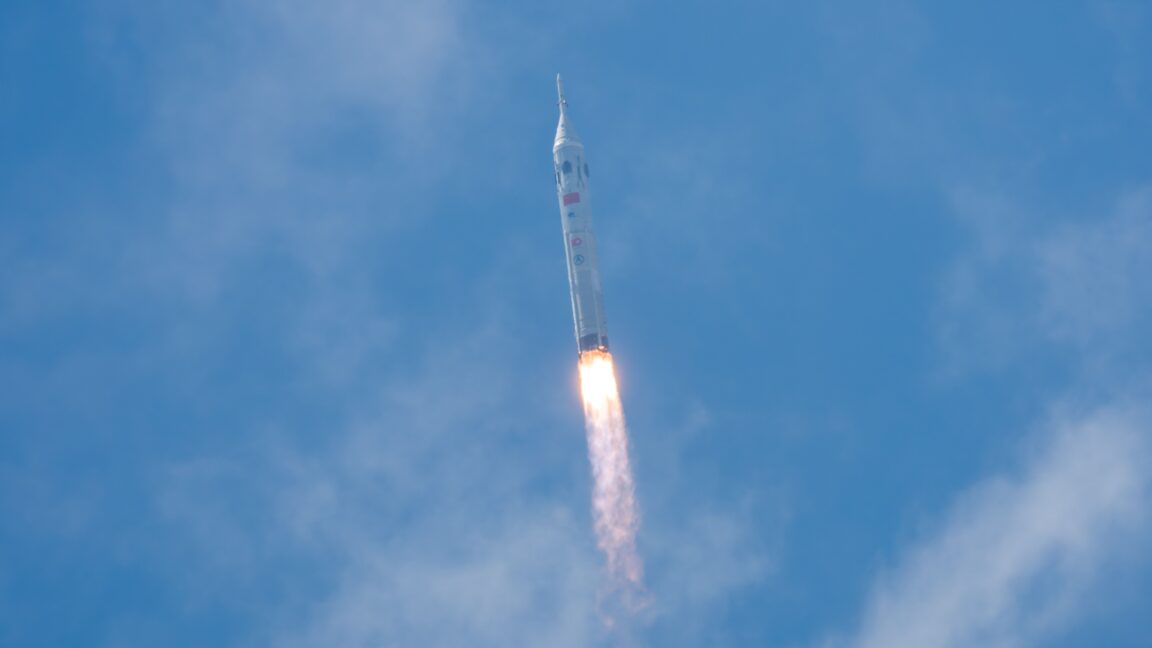
Chinese space officials, including Wang Xiang, chief designer of the lunar exploration program, presented the country's most detailed public plan yet for landing astronauts on the Moon "before 2030" at the Seventh Manned Spaceflight Conference in Beijing over the weekend. According to Ars Technica, the landing will use lunar-orbit rendezvous, as Apollo did, but without a rocket as powerful as the Saturn V the crew and the lander will launch separately.
According to the slides shown: in early 2027, an uncrewed test of the Long March 10A rocket and the Mengzhou crew spacecraft in low Earth orbit; in 2028, an uncrewed test of the Long March 10 rocket and the Lanyue lunar lander, including descent to and ascent from the lunar surface; in 2029, two simultaneous launches of an uncrewed Mengzhou and Lanyue that will dock in lunar orbit; and finally a dual launch with crew aboard Mengzhou and a crewed landing.
The plan, for now at least, does not include a crewed flight to the Moon without a landing, like Apollo 8 or Artemis II. NASA is aiming for a crewed landing in 2028, but according to Ars Technica there are major questions about the SpaceX and Blue Origin lunar landers, and a US landing could slip to 2030 or later. The Mengzhou spacecraft for the 2027 test has already arrived at the Wenchang launch site in Hainan.