

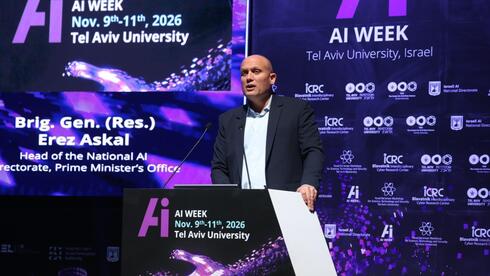
Askal presented the strategy at AI & Cyber Week at Tel Aviv University. He said that within five to seven years, essential systems such as energy, water and healthcare will rely increasingly on AI, and that dependence on foreign companies for models and infrastructure could expose countries to commercial interests and disruptions in access. "If it's not your AI, you have no control over your country," he said. Under the plan, Israel will not build everything itself, but will keep control of critical components while working with international partners.
The target is about 300,000 GPUs: 100,000 for domestic needs in academia, government, defense and startups, and 200,000 for technology companies and data centers. This requires about 2 gigawatts of power capacity for AI infrastructure, data centers and chip manufacturing, at a time when the grid is already under growing pressure from data centers. Another central goal is an advanced Israeli foundation model; Askal said it could be built in cooperation with countries facing similar challenges.
Israel has also issued a tender for a national quantum computer to be built in the country, and has set up the National Institute for Impact-Driven AI to promote applications in healthcare, education and transportation. The required investment and timelines were not detailed in the report.