

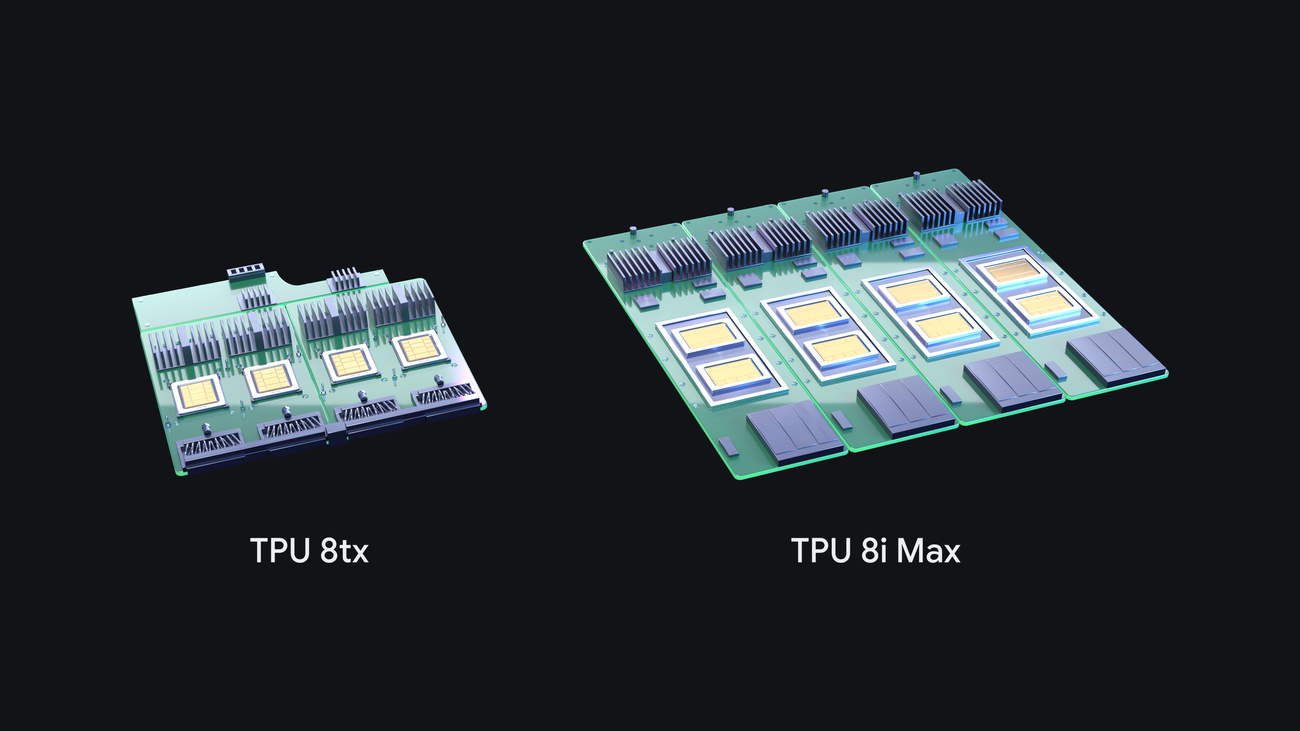
Google added two systems to its eighth-generation TPU family, following TPU 8t for training and TPU 8i for inference, introduced in April. According to the company, these are new systems built around the same silicon rather than new chips: what changes is the packaging, memory, networking and security around the chip.
TPU 8tx uses the same chip as TPU 8t, paired with 5th-generation AMD EPYC host CPUs, and targets confidential inference: data and model weights stay protected and isolated even while in use. It adopts the low-latency Boardfly network and, according to Google, delivers up to 2x lower latency than TPU 8t. It is aimed at regulated enterprises and governments that want to fine-tune models and run agents on sensitive data without moving it between clusters.
TPU 8i Max combines two TPU 8i chips in a single package, doubling compute, SRAM and HBM bandwidth compared with TPU 8i within the same rack footprint. It is designed for massive context windows and many agents working together. Google said TPUs now have nearly 100 customers, but the announcement did not give pricing or availability dates.