Annanim News
Now
Tools & productsGoogle Meet's real-time voice translation now supports Hebrew and 62 other languagesRegulation & businessIsrael Securities Authority publishes draft rules for AI in investment advice and portfolio managementQuantum & precision measurementFinland's IQM books €42.2 million in quarterly orders as revenue rises 51%CybersecurityApple will start scanning iCloud photos and files shared through public linksModels & researchMoonshot AI releases the weights of Kimi K3.1 Pro, a 2.8-trillion-parameter modelCybersecurityGhostMap: Android flaw lets an app trap a phone in a boot loopCybersecurityResearchers: White House internet addresses were rentable through 28 residential proxy servicesCybersecurityOpenAI: an agent pipeline found and patched 948 Linux flaws that grant root accessChips & hardwareReport: Oracle cancels $7 billion AI chip lease to Tencent under Trump administration pressureCybersecurityReport: Palo Alto Networks in talks to buy Israel's Clutch Security for $500 millionDefense techNaval Group unveils an 8,000-ton drone carrier conceptTools & productsChatGPT now makes animated GIFs, with the Images 2.6 modelCybersecurityIsrael's Brava emerges with $15 million to test whether attack detection worksCybersecurityDreamHost: attackers stole FTP passwords for two months via its File Manager

Originally published:

Google Meet's real-time voice translation now supports Hebrew and 62 other languages

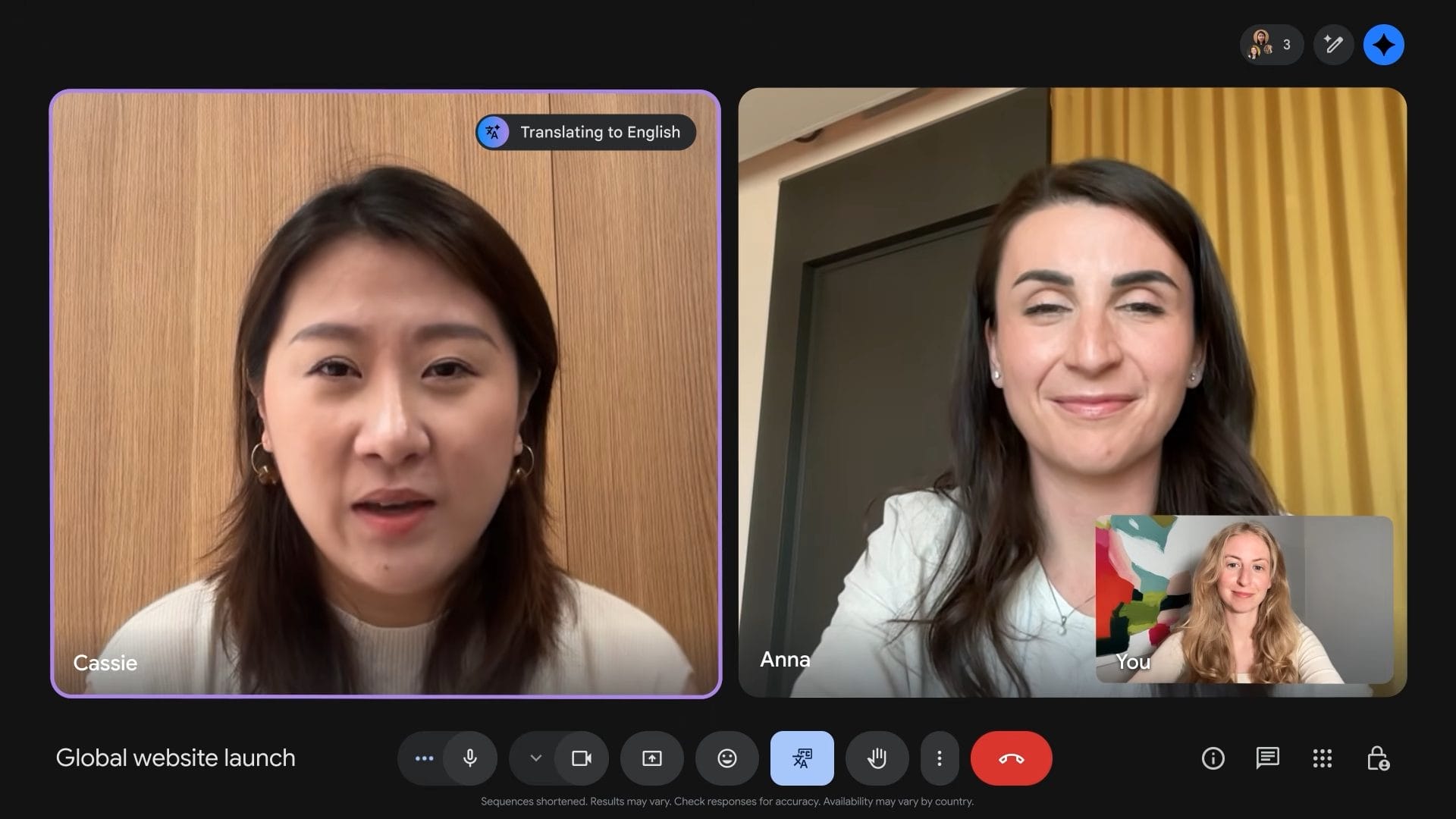
Google expanded two-way voice translation in Google Meet to 63 languages, including Hebrew. The feature runs on Gemini 3.5 Live Translate and dubs the speaker into the language each participant chooses.

Google Meet's real-time voice translation now supports Hebrew and 62 other languages
Image: גיקטיים (opens the source site in a new tab)

Google announced that Google Meet's voice translation feature now supports 63 languages, including Hebrew, Arabic, Persian, Russian, Amharic and Cantonese. Translation works both ways and runs on Gemini 3.5 Live Translate: each participant chooses which language to hear the other side in, and which languages never to translate.

In a test by Geektime, the feature lowers the speaker's voice when it kicks in and, after a delay of a second or two, plays a dubbed version in the chosen language, trying to imitate the speaker's voice. In Hebrew and English the translation was "not bad at all", but the voice sometimes distorted and the system occasionally confused two speakers.

As usual with Google, the rollout is gradual, and the feature may not appear for every user right away.

Sources

Topics

Install the app

In Safari: tap the Share button, then “Add to Home Screen”.