
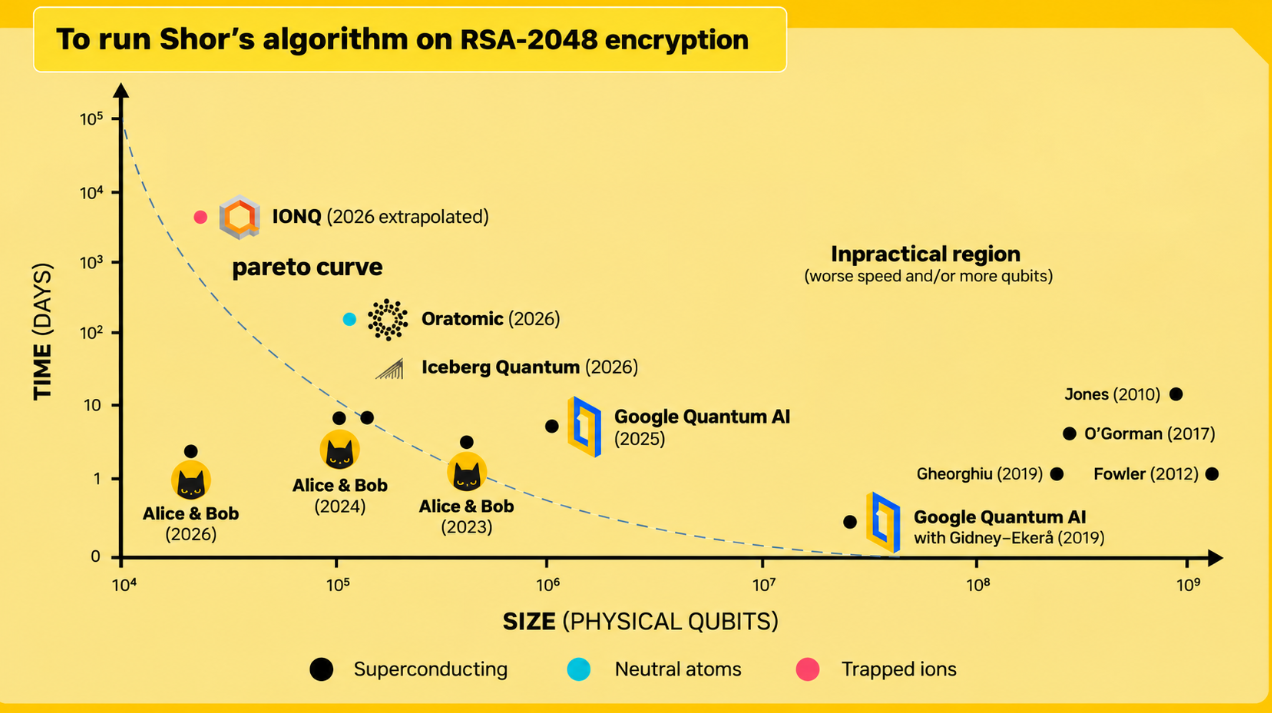
According to the company, that is 40 times fewer physical qubits than Google Quantum AI researcher Craig Gidney's 2025 estimate for breaking RSA-2048. The paper was published on IACR ePrint and, unlike estimates that count logical qubits and multiply, it works out for the heaviest parts of the algorithm what each physical qubit does and when, including chip layouts and schedules.
The lower estimate rests on three elements: cat qubits that suppress bit-flip errors in hardware, LDPC-cat codes that cut the count from 49,649 in a 2023 estimate to 22,593, and an adder redesigned so it does not wait for error correction.
The company notes that substantial engineering challenges remain and expects hardware progress and falling requirements to converge in the early 2030s. It recommends that organizations begin migrating to post-quantum cryptography.