Annanim News
Now
CybersecurityMore stories: Apache Roller, F5 flaws, Rockwell and AGILOX, and quantum researchCybersecurityUkraine and the FBI arrest four suspects in a ransomware gang that collected more than $40 millionQuantum & precision measurementNIST shows the first complete quantum position verification: quantum physics confirms where a person isAutonomous vehiclesTesla tightens driver monitoring in its European driving system: hands on the wheel above 130 km/hCybersecurityPalo Alto Networks to acquire Applied Compute for $4.5 billion in stockModels & researchGoogle launches Gemini 4 Neon, a fast model for code, office work and agentsChinaChina Watch: Tencent raises its computing infrastructure spending sixfoldCybersecurityDecade-old NGINX flaw lets attackers run code on HTTP/2 servers without logging inRegulation & businessAnthropic prices its IPO at $83 a share, above the range, and starts trading on Nasdaq todayCybersecurityMore stories: cracking BitLocker PINs, Russian hackers and Nvidia's guaranteesSpace, satellites & commsVoyager 1 becomes the first human-made object one light-day from EarthCybersecurityIsrael's Vero Security raises $11 million to secure enterprise AI agentsAI agentsGoogle turns its Spark agent into Tasks inside Gemini and makes it free

Originally published:

NIST shows the first complete quantum position verification: quantum physics confirms where a person is

NIST researchers and collaborators demonstrated quantum position verification (QPV) without the loopholes that undermined earlier attempts, using entangled photons and a Bell test. The study was published in Nature; the researchers say practical use may be more than a decade away.

NIST shows the first complete quantum position verification: quantum physics confirms where a person is
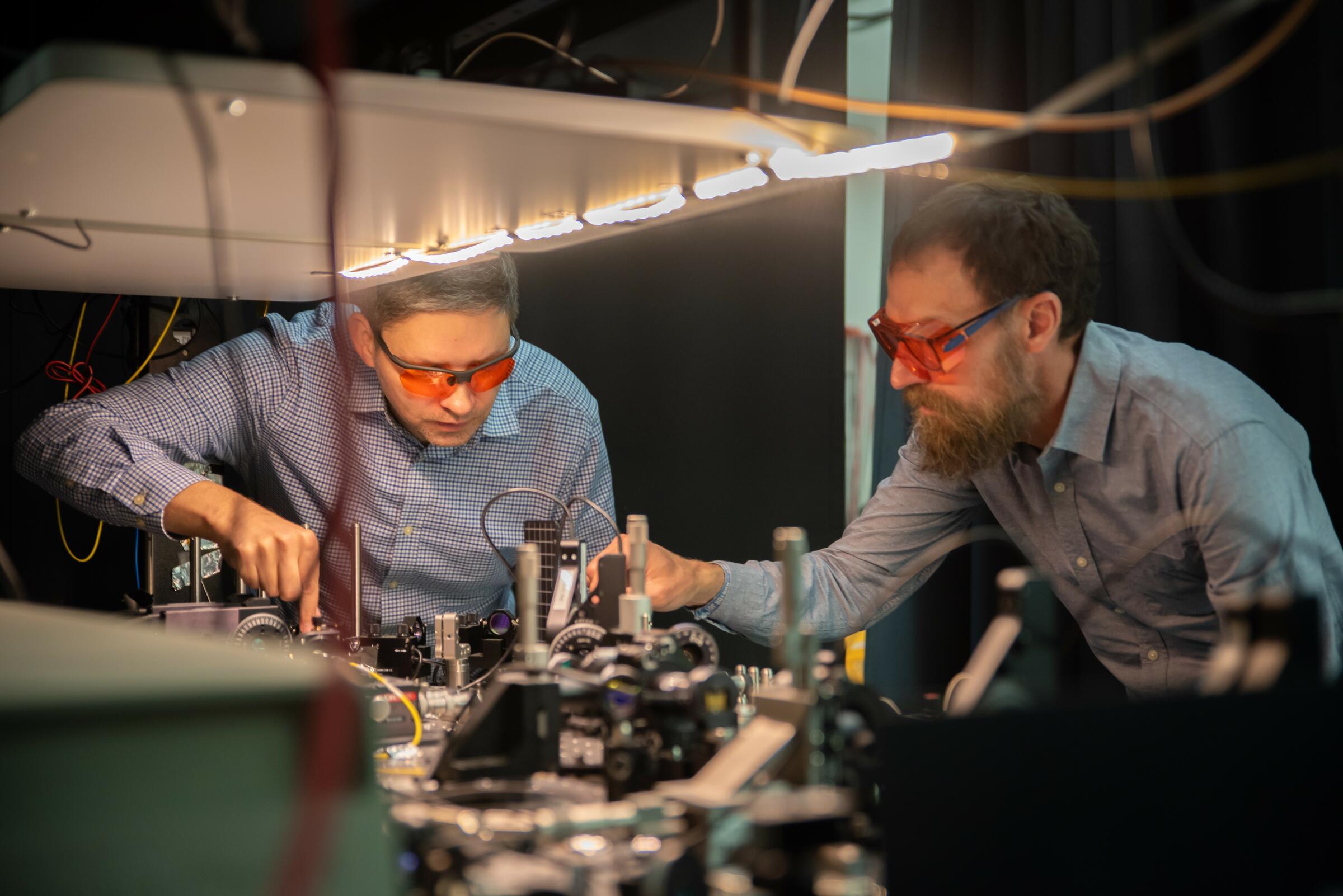
Image: NIST (opens the source site in a new tab)

Scientists at the US National Institute of Standards and Technology (NIST) and international collaborators reported in Nature the first complete demonstration of quantum position verification (QPV): a method in which two verifiers confirm that a third party is really at a particular location. According to the researchers, it closes loopholes that left earlier approaches open to fraud.

On the NIST campus in Boulder, the team built two verifying stations 195 meters apart. One creates a pair of entangled photons and sends one to the "prover." Both stations send random numbers timed to arrive at the same moment, and the prover measures the photon's polarization accordingly and reports back. The response time and a loophole-free Bell test, repeated millions of times over a few minutes, prove the prover is where they claim.

According to NIST, the method could one day allow access to sensitive systems, such as bank transfers, only from a verified location. But practical use requires high-fidelity quantum communication networks that are still being developed, and the researchers estimate that this may be more than a decade away.

Sources

Topics

Install the app

In Safari: tap the Share button, then “Add to Home Screen”.