Annanim News
Now
CybersecurityMore stories: Apache Roller, F5 flaws, Rockwell and AGILOX, and quantum researchCybersecurityUkraine and the FBI arrest four suspects in a ransomware gang that collected more than $40 millionQuantum & precision measurementNIST shows the first complete quantum position verification: quantum physics confirms where a person isAutonomous vehiclesTesla tightens driver monitoring in its European driving system: hands on the wheel above 130 km/hCybersecurityPalo Alto Networks to acquire Applied Compute for $4.5 billion in stockModels & researchGoogle launches Gemini 4 Neon, a fast model for code, office work and agentsChinaChina Watch: Tencent raises its computing infrastructure spending sixfoldCybersecurityDecade-old NGINX flaw lets attackers run code on HTTP/2 servers without logging inRegulation & businessAnthropic prices its IPO at $83 a share, above the range, and starts trading on Nasdaq todayCybersecurityMore stories: cracking BitLocker PINs, Russian hackers and Nvidia's guaranteesSpace, satellites & commsVoyager 1 becomes the first human-made object one light-day from EarthCybersecurityIsrael's Vero Security raises $11 million to secure enterprise AI agentsAI agentsGoogle turns its Spark agent into Tasks inside Gemini and makes it free

Originally published:

Anthropic: Claude Mythos ported a model to AMD chips in three days, instead of up to a year

Anthropic told investors ahead of its IPO that Claude Mythos Preview did almost on its own the software work needed to run one of its models on AMD MI355X GPUs, in about three days. It says such work used to take six to 12 months.

Anthropic: Claude Mythos ported a model to AMD chips in three days, instead of up to a year
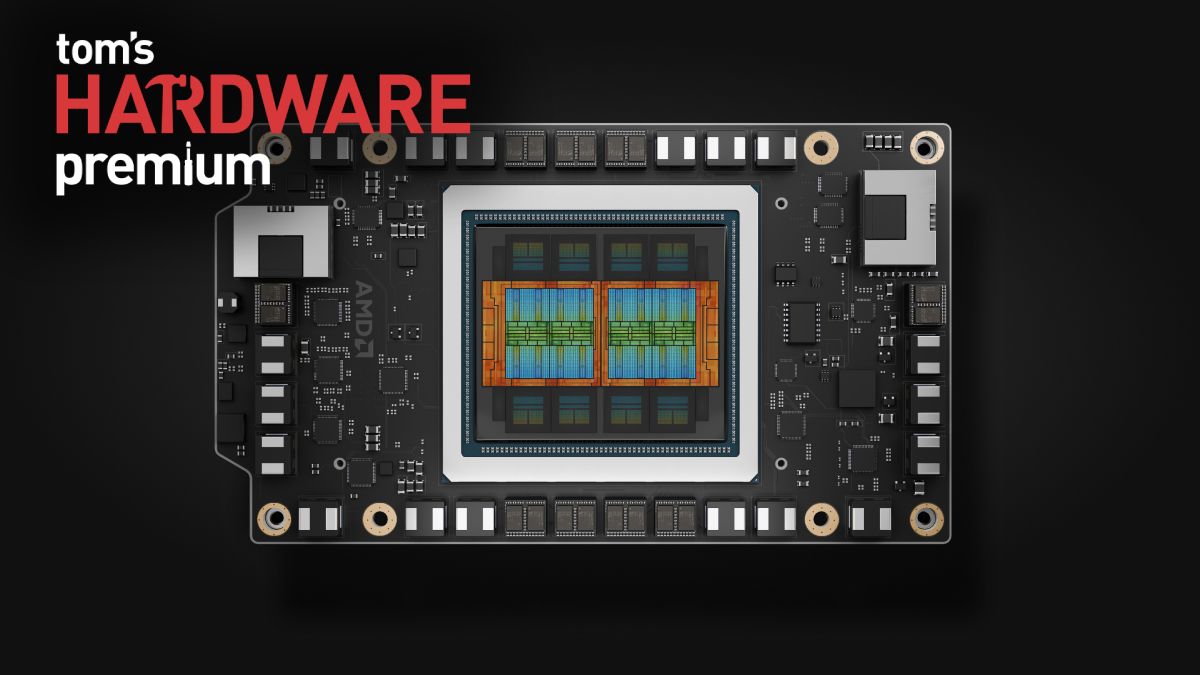
Image: Tom's Hardware (opens the source site in a new tab)

According to Tom's Hardware, the three days cover prompt processing for one Anthropic model on AMD Instinct MI355X GPUs "at a useful level of performance," with Mythos porting or writing "almost 100% of the kernels" with basically no human intervention. Tom Brown, Anthropic co-founder and chief compute officer, said the work used to require a team of "dozens of engineers." The comparison is based on the company's past experience bringing up new accelerators with traditional engineering methods.

Kernels are low-level code that ties an AI model to one maker's chips, and they are a core part of Nvidia's advantage with its CUDA platform. AMD has an equivalent, ROCm, but moving to it requires adapting the code. Anthropic already runs its models on several kinds of chips: Nvidia and AMD GPUs, Google TPUs and AWS Trainium, and manages them as one pool of compute. The company began working with AMD GPUs this year, under an agreement for up to 2 gigawatts.

The figures come from the company's statements to investors, not from independent testing. It has not been published whether stages of running the model beyond prompt processing were adapted the same way.

Sources

Topics

Install the app

In Safari: tap the Share button, then “Add to Home Screen”.