Annanim News
Now
CybersecurityMore stories: Apache Roller, F5 flaws, Rockwell and AGILOX, and quantum researchCybersecurityUkraine and the FBI arrest four suspects in a ransomware gang that collected more than $40 millionQuantum & precision measurementNIST shows the first complete quantum position verification: quantum physics confirms where a person isAutonomous vehiclesTesla tightens driver monitoring in its European driving system: hands on the wheel above 130 km/hCybersecurityPalo Alto Networks to acquire Applied Compute for $4.5 billion in stockModels & researchGoogle launches Gemini 4 Neon, a fast model for code, office work and agentsChinaChina Watch: Tencent raises its computing infrastructure spending sixfoldCybersecurityDecade-old NGINX flaw lets attackers run code on HTTP/2 servers without logging inRegulation & businessAnthropic prices its IPO at $83 a share, above the range, and starts trading on Nasdaq todayCybersecurityMore stories: cracking BitLocker PINs, Russian hackers and Nvidia's guaranteesSpace, satellites & commsVoyager 1 becomes the first human-made object one light-day from EarthCybersecurityIsrael's Vero Security raises $11 million to secure enterprise AI agentsAI agentsGoogle turns its Spark agent into Tasks inside Gemini and makes it free

Originally published:

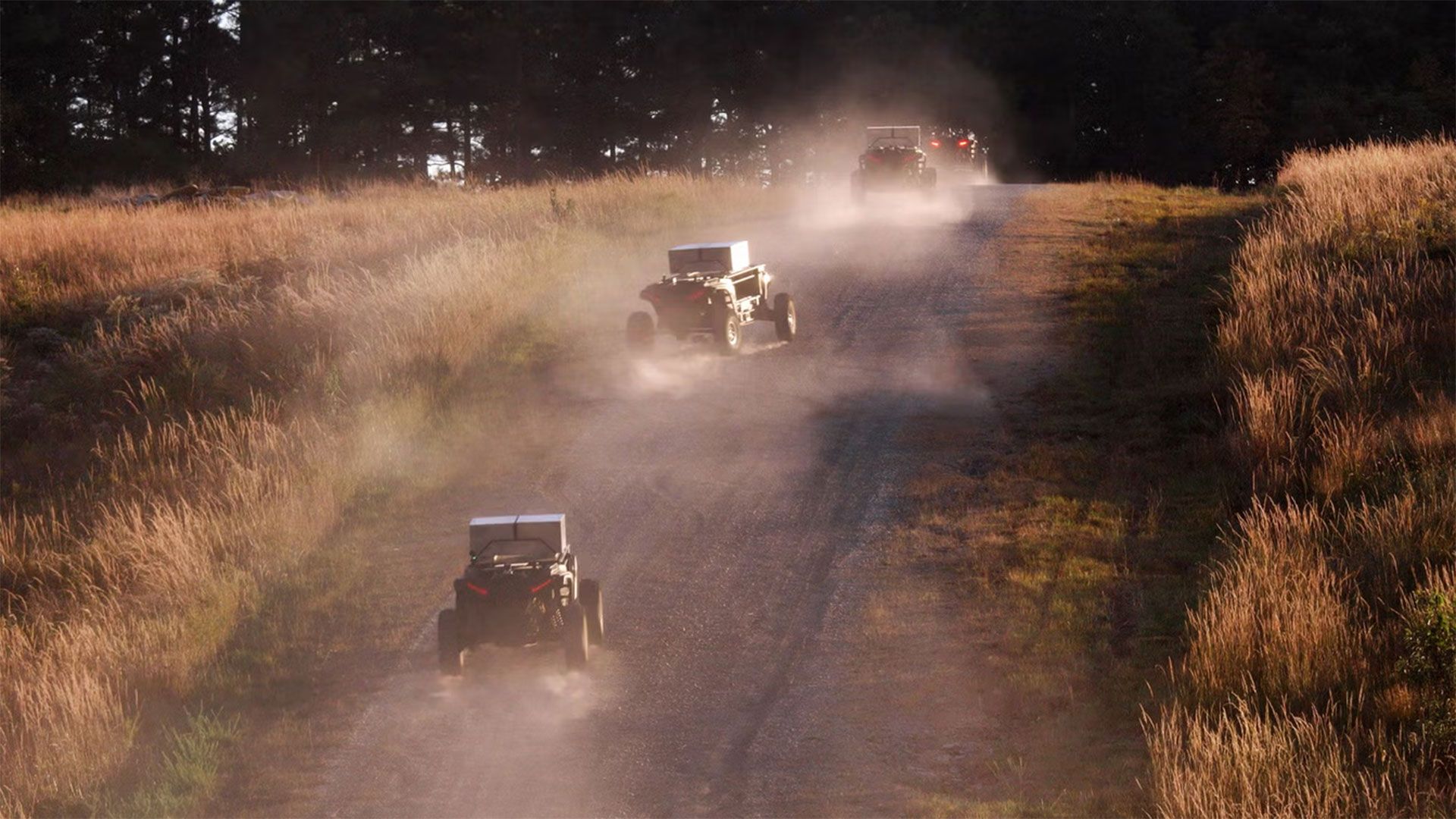
DARPA tests a pack of four autonomous ground vehicles in a simulated exercise

In mid-October at Fort Knox, Kentucky, four unmanned ground vehicles (UGVs) worked as an autonomous team that surveyed terrain and located simulated targets. Every decision to fire stayed with a human operator.

DARPA tests a pack of four autonomous ground vehicles in a simulated exercise
Image: Tom's Hardware (opens the source site in a new tab)

According to Tom's Hardware, citing a DARPA blog post, the test took place at Fort Knox's St. Vith Range, chosen partly because its landscape resembles the European theater, and was held at the request of European allies. In the scenario, an operator received a tip about a simulated threat along with satellite imagery and sent the pack to the area. One vehicle went ahead to scout while three waited behind; three of the four carried drones.

"All the mobility, all the movement, all the detections, all of that is autonomous," said Jason Gregory, a technical advisor at DARPA. "But they don't pull the trigger until a human says pull the trigger." The vehicles are modular and can carry a range of payloads.

The exercise is part of DARPA's RACER program for robotic autonomy in complex terrain. According to Gregory, after five years of work the vehicles can be given tasks rather than being driven manually, and they move off-road at least as fast as a human driver. According to DARPA, testers believe the vehicles are also ready for logistics missions such as delivering food and ammunition. Further tests are scheduled for December, involving serving soldiers.

Sources

Topics

Install the app

In Safari: tap the Share button, then “Add to Home Screen”.